


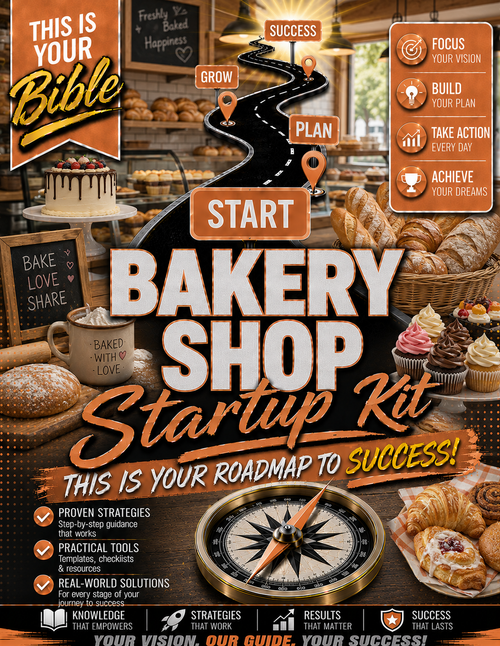
START YOUR OWN BAKERY BUSINESS
Turn Fresh-Baked Favorites, Creativity, and Customer Loyalty Into a Profitable Business
Build a Business Around Breads, Cakes, Pastries, Cookies, Desserts, and Specialty Baked Goods
Fresh baked goods have a powerful appeal. From the aroma of bread coming from the oven to beautifully decorated cakes, pastries, cookies, muffins, pies, cupcakes, brownies, and specialty desserts, bakeries create products customers purchase for everyday enjoyment, celebrations, gifts, holidays, meetings, weddings, and special events. A Bakery business can take many forms. You may operate a neighborhood retail bakery, specialty cake shop, artisan bread bakery, dessert bakery, wholesale operation, home-based bakery where permitted, online bakery, farmers market business, catering bakery, or production kitchen supplying restaurants, cafés, grocery stores, and other businesses.
Running a successful Bakery involves much more than knowing how to bake. It includes product development, recipe costing, ingredient sourcing, food safety, production scheduling, equipment management, pricing, merchandising, customer service, marketing, staffing, inventory control, financial management, and maintaining consistent quality. This Bakery Business Start-Up Kit shows you how to organize, launch, market, and manage a professional bakery while creating opportunities for retail sales, custom orders, catering, wholesale accounts, seasonal products, special events, online ordering, delivery, and long-term business growth.
IMAGINE RUNNING A BUSINESS THAT:
• Turns baking skills and creativity into income
• Creates products customers enjoy and celebrate with
• Generates repeat neighborhood customers
• Offers strong holiday and special-event opportunities
• Can serve both consumers and commercial accounts
• Expands through custom orders and catering
• Can develop signature products and a recognizable brand
• Offers excellent long-term growth potential
IS THIS BUSINESS RIGHT FOR YOU?
This business may be a good fit if you enjoy baking, creating attractive food products, working with customers, developing recipes, organizing production, or building a food-based brand. Experience in baking, pastry arts, food service, catering, restaurant operations, retail, decorating, hospitality, customer service, or business management is valuable. Entrepreneurs can also begin with a focused product line and expand their skills, staff, and menu over time.
Bakery work can involve early mornings, standing for extended periods, production deadlines, holiday rushes, temperature control, food handling, cleaning, and careful attention to consistency. Depending on your location and business model, you may need business licensing, food establishment permits, health department approval, food-handler or manager certification, inspections, zoning approval, sales tax registration, insurance, labeling compliance, allergen procedures, commercial kitchen approval, and other food-service requirements. Home-based operations must comply with applicable cottage-food or home-kitchen rules.
WHAT YOU'LL LEARN
Understanding the Bakery Industry
Learn about:
• Retail bakeries
• Artisan bread businesses
• Cake and cupcake shops
• Pastry and dessert bakeries
• Home-based bakeries
• Wholesale baking
• Online ordering
• Catering and special events
• Industry trends
• Revenue opportunities
You'll learn how successful bakeries combine delicious products, consistent quality, attractive presentation, smart pricing, efficient production, food safety, customer service, and effective marketing.
Choosing Your Bakery Concept
Discover opportunities involving artisan breads, cakes and cupcakes, cookies, pies and tarts, muffins and scones, brownies and bars, croissants and pastries, cheesecakes, dessert trays, and specialty or dietary baked goods. You may specialize in celebration cakes, wedding cakes, breads, pastries, cookies, desserts, corporate gifts, holiday products, vegan baking, gluten-conscious products where appropriate controls are in place, or a broad neighborhood bakery menu. A focused concept can make purchasing, production, branding, pricing, and marketing easier while helping customers understand what makes your bakery special.
Developing Your Menu
Learn how to select core products, develop signature items, standardize recipes, test batch sizes, plan seasonal products, create custom-order options, develop catering selections, introduce premium products, control menu complexity, and evaluate product profitability. A strong bakery menu balances customer appeal with production efficiency. Too many products can increase waste, ingredient inventory, labor, and production complexity. Signature products can help distinguish your bakery and give customers a reason to recommend your business.
Pricing Your Baked Goods
Learn how to calculate ingredient costs, account for labor, include packaging costs, calculate production overhead, price custom cakes, price specialty desserts, develop catering prices, establish wholesale pricing, evaluate competitor pricing, and protect profit margins. Pricing should account for more than ingredients. Labor, utilities, rent, equipment, packaging, insurance, spoilage, marketing, payment processing, taxes, cleaning, and administrative costs also affect profitability. Custom work should reflect the additional time, skill, decoration, consultation, and complexity involved.
Equipment & Supplies
Learn about commercial ovens, mixers, refrigeration, freezers, proofing equipment, baking pans and racks, worktables, display cases, decorating equipment, smallwares, packaging supplies, and cleaning and sanitation equipment. Your equipment needs depend on your product mix and production volume. A cake-focused bakery has different requirements from an artisan bread bakery or wholesale production operation. Equipment layout should support safe and efficient movement from ingredient storage through preparation, baking, cooling, decorating, packaging, display, and customer pickup.
Finding Customers
Discover strategies for reaching neighborhood residents, families, office workers, wedding customers, event planners, schools and organizations, corporate customers, restaurants and cafés, grocery and specialty stores, and online customers. Repeat customers can become the foundation of a bakery, while weddings, birthdays, anniversaries, holidays, graduations, corporate events, showers, and other celebrations can generate larger orders. Wholesale relationships with cafés, restaurants, hotels, specialty retailers, and other businesses can create additional recurring revenue when pricing and production capacity support them.
Marketing Your Bakery
Learn how to build local awareness, showcase products online, use professional food photography, develop social media content, encourage customer reviews, promote seasonal products, market custom cakes, build wedding and event relationships, develop corporate accounts, and create loyalty programs. Bakery products are highly visual. Attractive photographs and videos of decorated cakes, fresh breads, pastries, cookies, desserts, production processes, seasonal collections, and custom orders can generate strong interest. Marketing should highlight freshness, craftsmanship, flavor, presentation, convenience, signature products, and the occasions your bakery helps customers celebrate.
Managing Daily Operations
Learn about production schedules, ingredient preparation, batch planning, opening and closing procedures, customer orders, custom-order tracking, inventory management, cleaning and sanitation, employee scheduling, payment processing, waste tracking, and financial reporting. Production planning is critical because baked goods have limited shelf lives. Accurate forecasting can help ensure enough product is available without creating excessive waste. Documented recipes, portion standards, decorating procedures, packaging standards, cleaning schedules, and production checklists make it easier to maintain consistency as your business grows.
Food Safety & Quality Control
Learn how to store ingredients safely, control temperatures, prevent cross-contact, manage allergens, maintain sanitation, label products appropriately, track ingredient freshness, develop cleaning schedules, train employees, and maintain consistent recipes. Customers trust bakeries to handle food safely and accurately represent ingredients and allergen information. Procedures should reflect applicable food-safety requirements and the realities of your production environment. Quality control also means ensuring customers receive consistent flavor, appearance, portion size, freshness, and presentation every time they purchase.
Creating Additional Revenue
Discover opportunities through custom cakes, wedding desserts, dessert tables, catering, corporate gift boxes, holiday collections, subscription boxes, wholesale accounts, baking classes, and branded merchandise. You may also offer preorder programs, seasonal gift collections, party packages, dessert trays, corporate appreciation gifts, wedding favors, birthday packages, or specialty product collections. Additional revenue streams should complement your core bakery rather than overwhelm production capacity.
Growing Your Business
Learn strategies for expanding your menu, increasing production capacity, hiring bakers and decorators, developing wholesale accounts, adding catering, building online ordering, expanding delivery, opening additional locations, creating standardized systems, and building a recognizable bakery brand. Many successful bakeries begin with a small product line and grow as demand becomes predictable. Expansion may include larger production equipment, additional employees, wholesale distribution, a larger storefront, or additional locations. Strong recipes, documented systems, disciplined food costs, quality control, customer retention, and effective production management provide the foundation for responsible growth.
INCLUDED IN YOUR BUSINESS START-UP KIT
Complete Bakery Business Start-Up Guide
A comprehensive guide covering the major stages of planning, launching, organizing, operating, and growing your Bakery business. It helps you choose a concept, develop products, research your market, establish pricing, plan equipment, organize production, market your bakery, manage customers, build additional revenue streams, and prepare for future expansion.
Startup Checklist
A practical checklist covering business registration, food-service requirements, kitchen planning, equipment, ingredient sourcing, menu development, recipe costing, pricing, packaging, food safety, payment systems, staffing, marketing, customer ordering, and operational readiness.
Business Plan
Planning resources designed to help define your bakery concept, products, target customers, startup expenses, equipment investments, pricing strategies, revenue projections, marketing approach, staffing plans, production procedures, and long-term goals. The plan can be adapted for neighborhood bakeries, cake shops, pastry businesses, artisan bread bakeries, home-based operations where permitted, wholesale bakeries, online bakeries, or multi-location businesses.
Marketing & Social Media Plans
A practical marketing plan for attracting neighborhood customers, families, wedding clients, event planners, corporate customers, restaurants, cafés, retailers, organizations, and repeat buyers. The Social Media Plan provides ideas for product photography, decorating videos, behind-the-scenes baking, seasonal products, new releases, customer celebrations, custom cakes, employee introductions, holiday promotions, and special-order campaigns.
Financial Planning Resources
Planning worksheets designed to help manage ingredients, equipment, rent, utilities, payroll, packaging, insurance, maintenance, delivery, advertising, taxes, software, payment processing, cash flow, operating expenses, and future expansion. Tracking food cost, labor, waste, average order value, custom-order profitability, wholesale margins, and product-level sales can help identify your strongest revenue opportunities.
Business Forms & Operations Resources
Resources may include recipe costing sheets, production schedules, custom-order forms, cake consultation forms, catering agreements, wholesale records, ingredient inventory sheets, cleaning checklists, temperature logs, employee schedules, invoices, customer feedback forms, supplier records, and financial tracking tools.
Proposal, Letter & Sales Resources
Professional proposal templates can help establish relationships with wedding planners, event venues, restaurants, cafés, hotels, corporate customers, specialty retailers, caterers, schools, and community organizations. Business communication and sales resources help introduce your bakery, promote custom orders, develop wholesale accounts, market holiday products, reconnect with customers, and generate repeat business.
BONUS MATERIALS (27 of them)
• Bakery business planning worksheets
• Menu development templates
• Recipe costing sheets
• Production planning checklists
• Custom-order forms
• Pricing worksheets
• Ingredient inventory tools
• Wholesale account resources
• Customer service templates
• Marketing and promotional materials
• Growth planning resources
• Bakery industry reference guides
And more.
WHO USES THIS KIT?
• New entrepreneurs
• Bakers
• Pastry professionals
• Cake decorators
• Home-based food entrepreneurs
• Catering professionals
• Restaurant and café owners
• Individuals seeking opportunities in the Bakery industry
FREQUENTLY ASKED QUESTIONS
Do I need professional baking experience?
Not necessarily, but you must be able to produce safe, consistent, high-quality products. Formal training, professional experience, classes, mentoring, and extensive practice can all help develop the skills required.
Can I start a Bakery from home?
Possibly. Many jurisdictions allow certain home-produced foods under cottage-food or similar laws, but permitted products, sales channels, labeling, revenue limits, inspections, and other rules vary by location.
What products should I sell?
Choose products that fit your skills, equipment, target customers, local demand, production capacity, and desired brand. A focused menu of strong sellers is often easier to manage than an oversized menu.
How should I price custom cakes?
Consider ingredients, labor, design complexity, decorating time, consultations, specialty supplies, packaging, delivery, overhead, and profit. Highly customized work generally requires different pricing from standard retail products.
Can I sell wholesale to other businesses?
Yes. Cafés, restaurants, hotels, specialty retailers, and other businesses may purchase baked goods regularly. Wholesale pricing must still cover your production costs and provide an acceptable margin.
Can I take orders online?
Yes. Online ordering can simplify preorders, custom-order deposits, holiday sales, pickup scheduling, delivery, and customer communication.
How can I reduce food waste?
Track sales carefully, forecast production, use preorder systems, standardize batch sizes, manage inventory, rotate ingredients, develop appropriate uses for suitable excess production, and adjust daily quantities based on demand.
Can this become a multi-location business?
Yes. A successful bakery can expand when recipes, production procedures, food costs, training, quality standards, management systems, and financial performance are strong enough to duplicate.
WHY THIS KIT?
Starting a Bakery business requires much more than being able to bake delicious products. You must understand food costs, production planning, equipment, food safety, pricing, customer service, inventory, marketing, staffing, financial management, and daily operations.
Without organized systems, bakeries can struggle with underpricing, excessive waste, inconsistent products, ingredient shortages, production delays, equipment problems, weak cash flow, custom-order mistakes, and customer dissatisfaction. Customers expect fresh products, appealing presentation, consistent quality, accurate orders, professional service, and safe food-handling practices. Delivering those elements consistently can turn occasional buyers into loyal customers.
This kit provides startup resources, business planning tools, forms, worksheets, marketing materials, operational resources, and organizational tools designed to help you establish a professional Bakery business. Whether your goal is opening a neighborhood bakery, specializing in cakes and desserts, developing artisan breads and pastries, selling online, building wholesale accounts, or eventually operating multiple locations, the Bakery Business Start-Up Kit provides a practical roadmap for getting started.
TAKE THE FIRST STEP TODAY
Customers purchase baked goods for everyday enjoyment and for some of life's most memorable occasions. A professionally operated Bakery can turn creativity, craftsmanship, and great products into a business built around repeat customers, celebrations, special orders, and community relationships.
Your business can begin with a focused selection of products and a clearly defined customer market. As demand grows, you can expand your menu, develop signature products, add custom orders, build wholesale relationships, offer catering, hire additional bakers and decorators, increase production capacity, and eventually open additional locations.
Strong recipes, consistent quality, disciplined pricing, excellent food safety, thoughtful presentation, and outstanding customer service can provide the foundation for building a respected and profitable Bakery business.
Get Your Bakery Business Start-Up Kit Today
Start Baking. Start Selling. Start Growing.
Order Now and begin building your Bakery business today.